⚡ Quick Bites (TL;DR)
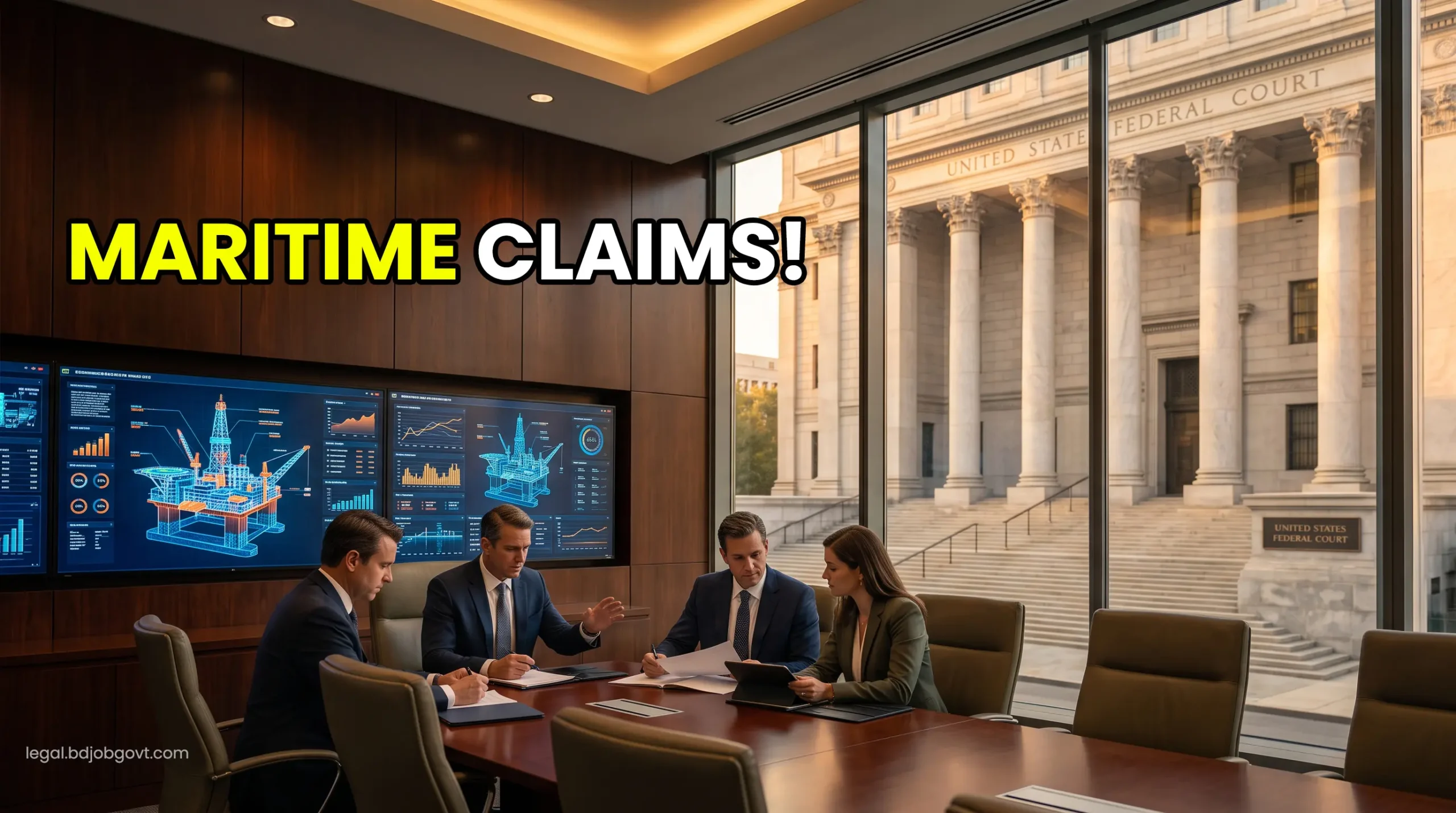
The maritime industry remains one of the most hazardous sectors within the United States economy, particularly regarding deep-water drilling and commercial offshore logistics. When catastrophic incidents occur on open waters, the resulting litigation is governed by a highly complex, archaic set of federal maritime statutes. Understanding these unique legal frameworks is absolutely essential for projecting corporate liability and securing maximum financial recovery.
As outlined in our comprehensive mass tort settlement guide 2026, maritime incidents rarely result in minor litigation. A single offshore blowout, helicopter transport failure, or heavy machinery malfunction can instantly trigger hundreds of millions of dollars in corporate financial exposure. Corporate defense teams approach these incidents as existential threats to the parent company’s solvency.
To navigate this volatile legal environment, victims and their families must leverage highly specialized legal counsel. Engaging a premium offshore accident attorney 2026 is the only proven method to successfully pierce the robust defensive layers established by global maritime insurance conglomerates.

The Evolving Application of the Jones Act in 2026
The Jones Act, formally known as the Merchant Marine Act of 1920, is the foundational federal statute that provides critical legal protections to qualifying American seamen. Unlike standard land-based workers’ compensation programs, the Jones Act uniquely allows injured maritime workers to directly sue their employers for negligence. This distinction is the primary driver of high-value offshore settlements.
To qualify for these robust protections, a worker must spend a significant portion of their employment connected to a vessel in navigation. In Q4 2026, corporate defense attorneys are aggressively challenging the legal definition of a “vessel,” attempting to reclassify floating platforms and specialized drilling rigs to deny Jones Act status to injured workers.
If an offshore worker successfully secures Jones Act status, they are entitled to “maintenance and cure,” which mandates the employer to cover all necessary medical expenses and provide a daily living stipend until maximum medical improvement is reached. Furthermore, they can pursue massive financial damages by proving that the employer’s negligence, however slight, contributed to their catastrophic injury.
The Doctrine of Unseaworthiness
Parallel to a Jones Act negligence claim, a highly effective legal strategy involves pursuing a claim based on the doctrine of unseaworthiness. Under general maritime law, a vessel owner owes an absolute, non-delegable duty to provide a ship and equipment that are reasonably fit for their intended purpose. This is a strict liability standard that heavily favors the injured plaintiff.
Unseaworthiness does not require the plaintiff to prove that the corporate owner was explicitly negligent or aware of the specific defect. If a rusted cable snaps, a gangway collapses, or a crew member lacks proper safety training, the vessel is legally deemed unseaworthy. Defending against these claims is notoriously difficult and financially draining for maritime operators.

Defeating the Limitation of Liability Act of 1851
One of the most controversial and financially dangerous legal maneuvers utilized by corporate maritime defense teams is invoking the Limitation of Liability Act of 1851. This antiquated federal law allows a vessel owner to proactively petition a federal court to cap their total financial liability for an accident at the post-incident value of the vessel and its pending freight.
If a multi-million dollar commercial rig is entirely destroyed in a catastrophic explosion, its post-incident value may effectively be zero. This draconian legal shield can completely wipe out the financial recovery prospects for severely injured survivors and the families of deceased crew members. Defeating this corporate petition is the highest priority in early maritime litigation.
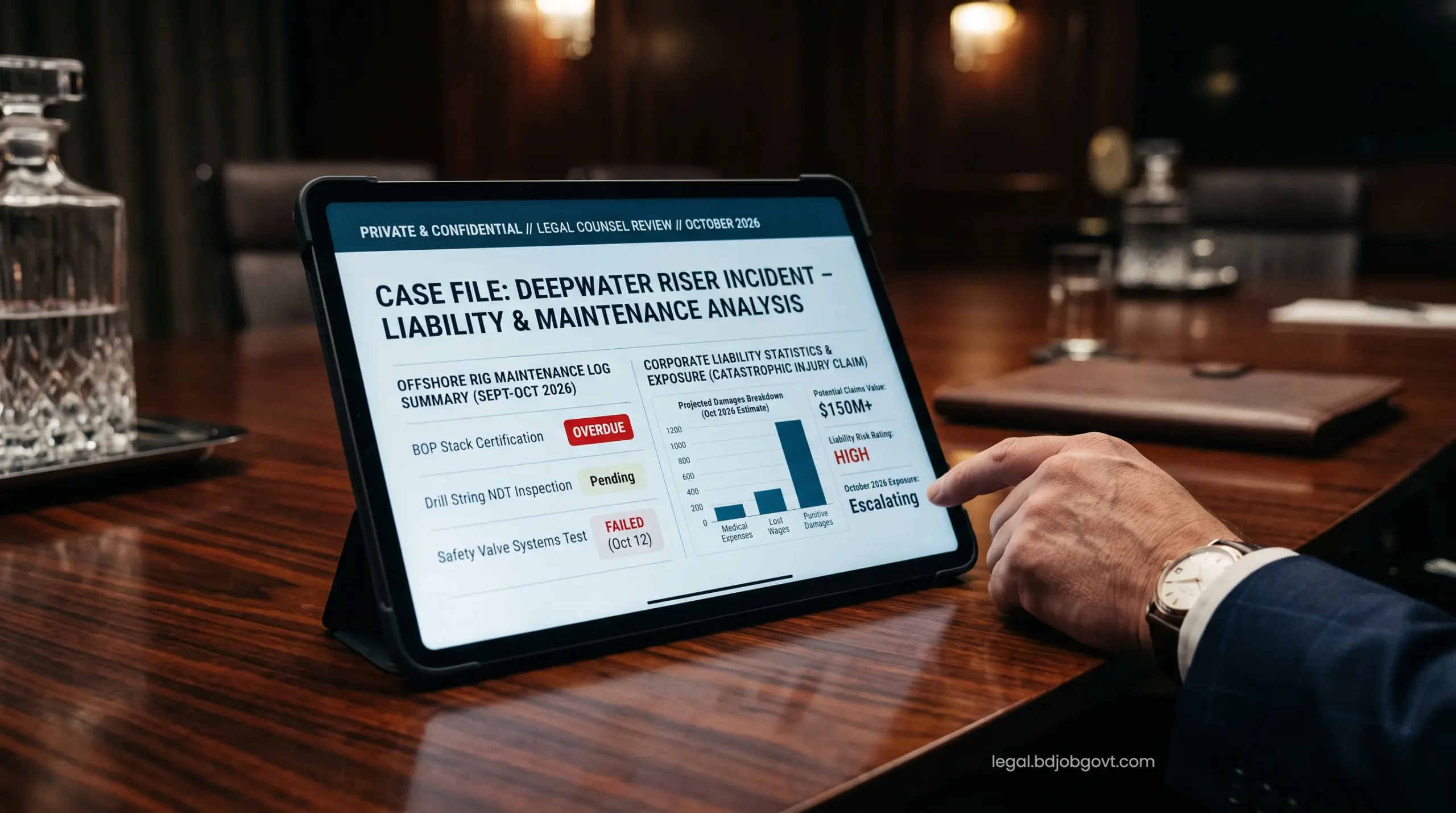
To break this liability cap in October 2026, an elite offshore accident attorney must meticulously prove that the corporate owners had “privity or knowledge” of the hazardous conditions that caused the accident. This requires aggressive, immediate electronic discovery to uncover internal corporate memos, deferred maintenance reports, and ignored safety audits from corporate headquarters.
💎 Mizanur’s Elite Legal Insight
“The timeline for evidence preservation in maritime law is brutally short. In Q4 2026, premium plaintiff firms are deploying immediate federal injunctions known as ‘Letters of Preservation’ within 24 hours of a rig accident. By legally freezing the accident scene and seizing the vessel’s digital black box before corporate risk managers can sanitize the data, attorneys secure the exact forensic proof needed to shatter the Limitation of Liability Act and force a premium, uncapped settlement.”
LHWCA: Protections for Non-Seamen Maritime Workers
Not all offshore and maritime workers qualify for the elite protections of the Jones Act. Longshoremen, harbor workers, shipbuilders, and platform workers operating on fixed offshore structures are typically covered under the Longshore and Harbor Workers’ Compensation Act (LHWCA). While this is a federal workers’ compensation program, it operates very differently from state-level systems.
The LHWCA is a no-fault system, meaning an injured worker does not need to prove corporate negligence to receive medical benefits and lost wage compensation. However, this system simultaneously bars the injured worker from suing their direct employer for massive punitive or pain-and-suffering damages, structurally limiting the overall financial recovery.
A sophisticated legal strategy for LHWCA claimants involves identifying third-party negligence. If a defective piece of machinery manufactured by a separate corporation caused the injury, the worker can file a lucrative third-party product liability lawsuit. This approach is identical to the strategies utilized by a top-tier commercial truck accident lawyer seeking to maximize compensation beyond basic insurance caps.

Evaluating Offshore Catastrophic Injury Damages
The financial valuation of a catastrophic offshore injury involves highly complex forensic economics and specialized medical projections. Because deep-water maritime work is physically demanding and financially lucrative, a career-ending injury results in a massive loss of future earning capacity. Calculating this lifelong economic deficit is central to demanding a premium corporate payout.
High-net-worth maritime professionals rely on their attorneys to contract elite vocational rehabilitation experts and forensic accountants. These experts create bulletproof life care plans that project inflation, required future surgeries, and the specific cost of lifelong home health care. Corporate defense teams aggressively attack these economic models during pre-trial discovery to mitigate their financial exposure.
Furthermore, much like the strategies seen in a massive mesothelioma corporate settlement, maritime attorneys must account for the psychological trauma associated with surviving a catastrophic offshore disaster. Diagnoses of severe PTSD following a rig explosion or vessel sinking significantly increase the non-economic damage multipliers applied by federal juries during a trial.

Frequently Asked Questions (FAQ)
What exactly constitutes a “vessel in navigation” under the Jones Act for 2026?
In Q4 2026, federal courts define a vessel in navigation as any watercraft practically capable of being used as a means of transportation on navigable waters. This broad definition frequently includes specialized drill ships, mobile offshore drilling units (MODUs), and jack-up rigs, allowing workers on these structures to qualify for lucrative Jones Act negligence protections.
How does the Limitation of Liability Act threaten my offshore injury settlement?
The Limitation of Liability Act allows corporate vessel owners to petition a federal court to cap their total financial responsibility for an accident to the post-incident value of the vessel. If a rig is destroyed, this value can be nearly zero, potentially wiping out all financial compensation for victims unless their attorney successfully proves the corporation had prior knowledge of the hazardous conditions.
Can an injured offshore worker sue a third-party contractor for negligence?
Yes. If a maritime worker is injured due to the negligence of a third-party entity—such as a separate equipment manufacturer, a specialized contracted maintenance crew, or a defective crane operator—they can file a third-party civil lawsuit for maximum financial damages, even if they are simultaneously receiving LHWCA workers’ compensation benefits from their direct employer.
Why is immediate evidence preservation critical in maritime litigation?
Following a catastrophic offshore incident, corporate operators frequently attempt to sanitize maintenance logs or repair defective equipment before federal investigators arrive. Immediate legal intervention allows an offshore accident attorney to issue binding preservation letters and secure digital vessel data, locking in the forensic proof required to secure a massive corporate settlement.